Service





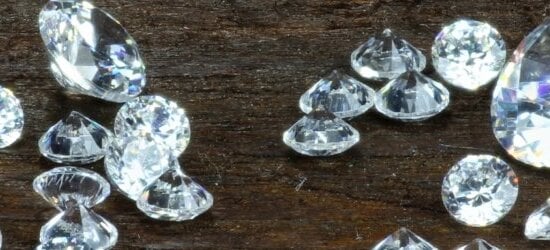
Diamond Clarity: The Expert Guide
A diamond's clarity is measured on a scale ranging from Flawless to Included. This scale was established by the Gemological Institute of America (GIA), though diamonds can also be graded by other certifying bodies. Inclusions are often thought of as a diamond's fingerprint, formed by the intense pressure and heat present at its creation and no two diamonds are ever the same
What are Diamond Inclusions?
Diamond inclusions, also known as flaws, are formed during a diamond's growth
There are several different types, including:
- Crystals: Small mineral deposits trapped inside the diamond as it forms. These could be another diamond crystal, or a different mineral entirely, such as garnet or diopside.
- Needles: Long, thin crystal deposits shaped like a needle.
- Pinpoints: Tiny crystal deposits that appear as small pinpricks. When clusters of these form together, they are referred to as a "cloud."
- Feathers: Small cracks or fractures within the diamond.
- Bruises: An impact point with small, root-like fractures beneath the surface.
- Twinning Wisps: Ribbon-like inclusions formed when a diamond's crystal growth is interrupted.
- Graining: Hazy or whitish lines caused by irregular crystal growth.
- Knots: A crystal inclusion that reaches or sits on the surface of the diamond.
How does Diamond Clarity grading work?
Diamond clarity is graded by gemologists who assess the diamond at 10x magnification.
They evaluate the diamond with five key grading factors:
- Size - How large the inclusion is
- Quantity - How many inclusions or blemishes are present
- Position - Inclusions under the table (centre) are worse than those near the girdle (edge) of the diamond.
- Type of flaw - Small pinpoints are less impactful than large crystals or feathers.
- Colour - How much contrast the inclusion has against the colour of the diamond. For example, dark inclusions may stand out more in a colourless diamond.
Generally, the fewer and smaller a diamond's inclusions, the higher its clarity grade will be. However, it's worth noting that a diamond with several small inclusions toward its edges may still be graded higher than one with a single large inclusion at the centre of the table, where it would be far more visible.
The Diamond Clarity Scale
The diamond clarity scale ranges from Flawless to Included. Diamonds without inclusions are significantly rarer than those with imperfections, which makes them considerably more valuable. That said, included diamonds can still be beautiful stones, with their unique characteristics adding to their individuality.
| Clarity | Example image | Definition |
|---|---|---|
| Flawless (FL) |
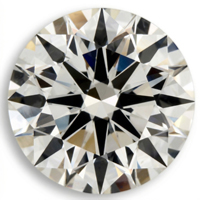
|
A flawless diamond has no internal or external inclusions or blemishes under 10x magnification. |
| Internally Flawless (IF) |
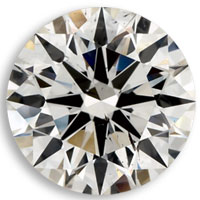
|
An internally flawless diamond has no internal inclusions under 10x magnification but may have minor surface blemishes. |
| Very, Very Slightly Included (VVS1, VVS2) |
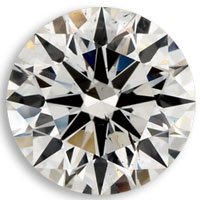
|
These diamonds have extremely small inclusions that are invisible to the naked eye and can even be difficult to detect under 10x magnification. |
| Very Slightly Included (VS1, VS2) |
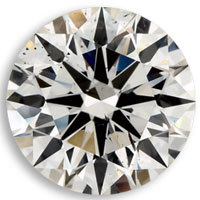
|
These diamonds contain small inclusions visible under 10x magnification, but they do not impact the diamond's overall appearance. |
| Slightly Included (SI1, SI2) |
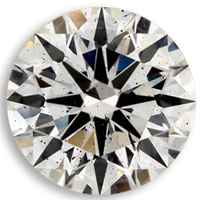
|
These diamonds have inclusions visible under magnification that may also be detectable to the naked eye on close inspection. |
| Included (I1, I2, I3) |
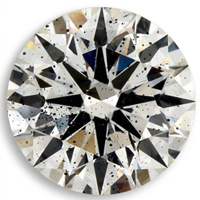
|
Included diamonds have noticeable inclusions visible to the naked eye, which can affect the diamond's transparency and brilliance. |
Which diamond shapes hide inclusions best?
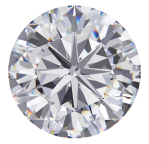
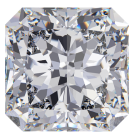
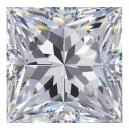
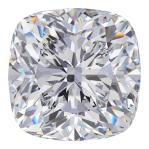
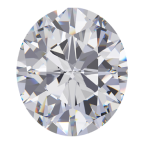
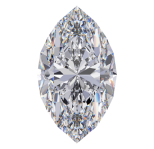
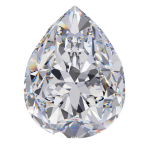
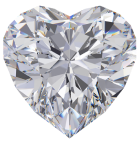
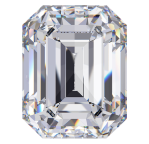
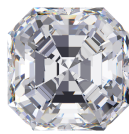
A diamond's shape has a significant impact on how visible its inclusions appear, determined largely by its facet pattern and the way it reflects light. Shapes with larger, deeper facets (such as step-cuts) tend to show inclusions more readily, as they act like windows or mirrors, allowing light to pass straight through. Brilliant cuts, on the other hand, scatter light in many directions, which helps to break up and disguise inclusions.
| Excellent | Good | Moderate | Poor | ||||||
|---|---|---|---|---|---|---|---|---|---|
| Round cut | Radiant cut | Princess cut | Cushion cut | Oval cut | Marquise cut | Pear cut | Heart cut | Emerald cut | Asscher cut |
|
|
|
|
|
|
|
|
|
|
Let us help you choose
Comparing diamond clarity across different shapes and styles can feel overwhelming. Our experts at Diamond Heaven are on hand to offer honest, transparent advice tailored to your personal taste and budget. Contact usfor specialist guidance, visit us in store, or book an appointment.